
Introduction
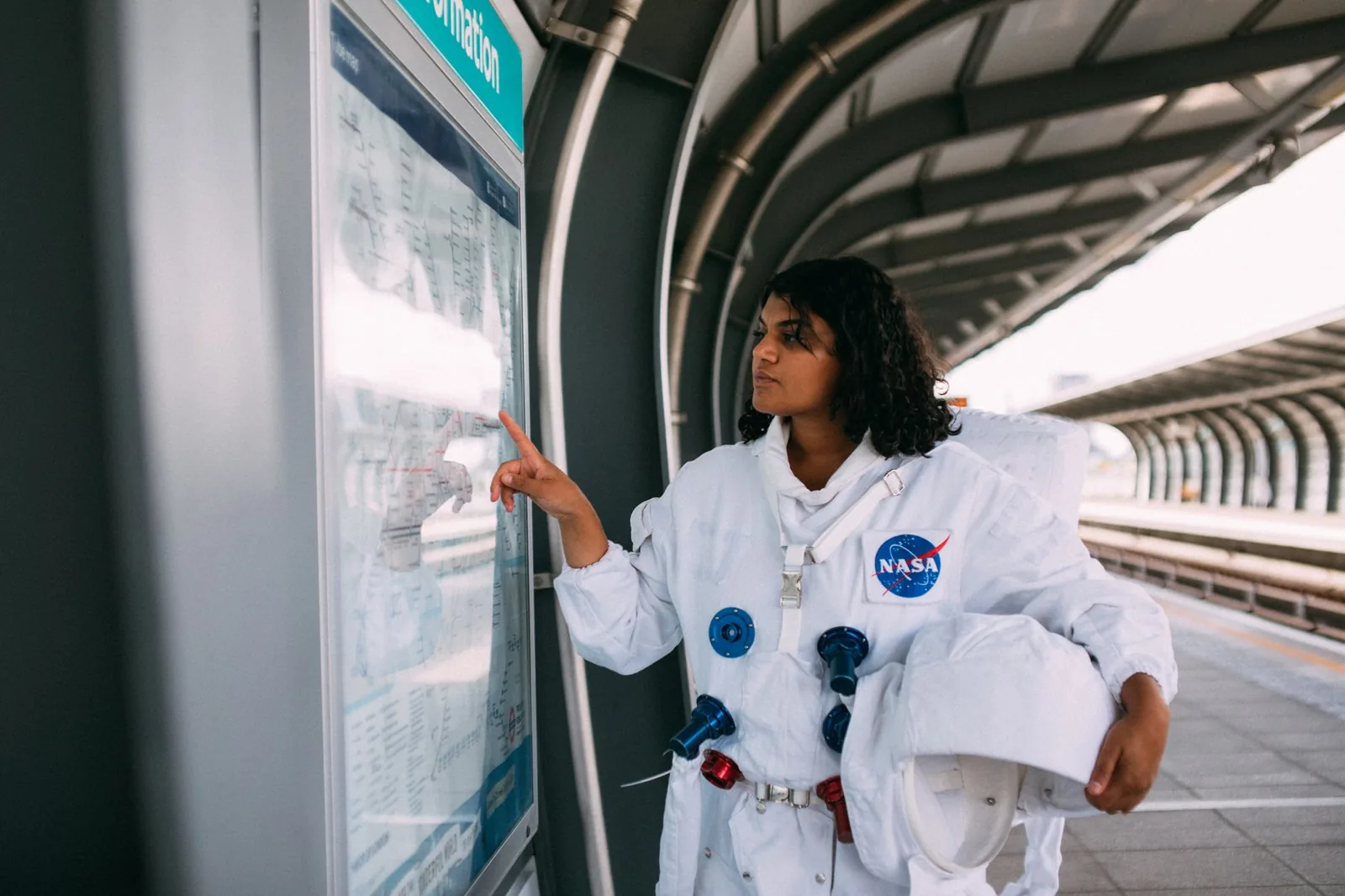
On September 10, 2026, IBM (NYSE: IBM) and NASA announced the open‑source release of the NASA‑IBM Lunar Foundation Model – one of the first publicly available foundation models designed specifically for scientific lunar exploration. By making the model, its training data, and benchmark suites freely accessible, the partnership aims to accelerate research that supports a sustained human presence on the Moon.
- --
What Is the Lunar Foundation Model?
The Lunar Foundation Model is a large‑scale, multimodal AI system trained on an extensive collection of lunar observations. It is integrated into the open‑source TerraTorch toolkit, enabling developers to fine‑tune, evaluate, and deploy the model with minimal friction.
- Open‑source availability – Hosted on Hugging Face with a companion research paper, the model can be downloaded, inspected, and modified by anyone.
- Machine‑learning‑ready datasets – Over 964,000 multispectral images at 100‑meter resolution, plus high‑resolution terrain and gravity data, are provided in a unified format.
- Benchmark collections – Standardized tasks such as ice detection, crater segmentation, and landing‑site suitability allow reproducible performance comparisons.
- --
Multi‑Mission Data Integration
The model’s training corpus unifies data from four NASA missions and one JAXA mission, creating a rich, multimodal view of the lunar surface and subsurface. For related analysis, explore our reporting on Make Policy Based on Science, Not on RFK’s Lifestyle Choices: A Modern Analytical Overview.
| Mission | Instrument(s) | Data Type | Resolution / Coverage |
|---------|----------------|-----------|-----------------------|
| Lunar Reconnaissance Orbiter (LRO) | LROC, LEND, LOLA | Optical, neutron, laser altimetry | 0.5‑100 m imagery, 10‑m topography |
| Gravity Recovery and Interior Laboratory (GRAIL) | GRACE‑like gravimeters | Gravity field | 10‑km global gravity maps |
| Lunar Prospector | Gamma‑ray spectrometer, neutron detector | Elemental composition, hydrogen mapping | 30‑km global coverage |
| SELENE/Kaguya (JAXA) | Multiband Imager, Terrain Camera, Laser Altimeter | Multispectral, DEM | 5‑100 m imagery, 30‑m DEM |
| Additional high‑resolution mission data | Various | Supplemental high‑res imagery & terrain | Sub‑meter to 10‑m |
By harmonizing these heterogeneous datasets, the model can learn correlations across spectral, topographic, and gravitational domains—something that traditional single‑instrument analyses cannot achieve.
- --
Technical Architecture
- Foundation‑model backbone – A transformer‑based architecture pre‑trained on the unified lunar dataset, similar to the architecture used for IBM’s Earth‑focused Prithvi models.
- TerraTorch integration – Provides data loaders, augmentation pipelines, and evaluation metrics tailored to planetary science.
- Open‑source licensing – Apache 2.0, allowing commercial and academic use without restriction.
- --
Immediate Applications
The model is already demonstrating strong performance on several key lunar‑science tasks:
- Ice and water‑ice mapping – Detecting permanently shadowed regions and hydrogen signatures critical for Artemis‑era resource utilization.
- Crater detection & classification – Automated segmentation of impact structures to support chronology studies.
- Landing‑site assessment – Evaluating terrain roughness, slope, and regolith depth for safe crewed landings.
- Volcanic feature characterization – Identifying anomalously young basaltic flows and lava tubes for potential habitats.
- --
Community Impact & Ecosystem
Because the model, data, and benchmarks are open, the lunar science community can:
1. Reproduce published results – The companion paper on Hugging Face includes full training scripts and hyper‑parameter settings.
2. Develop downstream models – Researchers can fine‑tune the foundation model for niche tasks such as mineralogy mapping or dust‑storm prediction.
3. Collaborate across disciplines – The same TerraTorch toolkit underpins IBM’s Prithvi (Earth observation) and Surya (heliophysics) models, fostering cross‑planetary AI research.
- --
Related IBM Foundation Models
| Model | Domain | Primary Use Cases |
|-------|--------|-------------------|
| Prithvi | Earth observation | Disaster monitoring, flood mapping, crop yield prediction, hurricane forecasting |
| Surya | Helio‑physics | Solar flare prediction, space‑weather forecasting |
| NASA‑IBM Lunar Foundation Model | Lunar science | Ice detection, crater mapping, landing‑site analysis, volcanic feature study |
The shared architecture demonstrates IBM’s strategy of building a family of domain‑specific foundation models that can be leveraged across planetary bodies.
- --
Future Outlook
The release marks a pivotal step toward open planetary AI. As more missions (e.g., NASA’s VIPER rover, ESA’s Lunar Pathfinder) deliver high‑resolution datasets, the model can be incrementally updated, continually improving its predictive power. Moreover, the open‑source nature encourages industry partners to build commercial tools for mission planning, in‑situ resource extraction, and even lunar‑based manufacturing. For related analysis, explore our reporting on Mastering the Art of Science Writing: Trends and Best Practices for 2026.
- --
Conclusion
The IBM‑NASA collaboration showcases how open‑source AI can democratize access to complex, multi‑instrument lunar data. By providing a powerful foundation model, a unified dataset, and a robust toolkit, the initiative empowers scientists worldwide to accelerate discoveries that will underpin humanity’s next great leap—living and working on the Moon.
- --


PEER OBSERVATIONS
Technical Discussion (0)
Join the Technical Discussion — Sign in or create an account to contribute observations and earn community points.